Key Takeaways:
Navigating a japan trip cost 2026 budget breakdown requires accounting for new daily spending averages alongside major policy changes across Japan.
- Budget tier: Expect to spend ¥8,000 to ¥12,000 ($53–$80) per day utilizing hostels, konbini meals, and city subways.
- Mid-range tier: Allocate ¥18,000 to ¥28,000 ($120–$187) daily for 3-star business hotels, sit-down dining, and regional train transit.
- Luxury tier: Plan for ¥50,000+ ($333+) daily to cover 5-star hotels or top ryokans, fine dining, and bullet trains.
- 2026 Cost Shifts: Budget for dual pricing (e.g., ¥2,500 non-resident entry at Himeji Castle) and Kyoto’s tiered accommodation tax up to ¥10,000 per night.
How Much Does a Trip to Japan Cost per Day in 2026?
A realistic daily travel budget for Japan in 2026 ranges from ¥8,000 ($53) for budget travelers to ¥25,000 ($167) for mid-range comfort, and upwards of ¥60,000 ($400) for luxury experiences. While favorable exchange rates keep daily living expenses reasonable for international tourists, recent structural policy shifts—including non-resident dual pricing, updated regional rail formulas, and municipal hotel taxes—have changed how daily spend baskets must be calculated.
When building a realistic Japan trip cost 2026 budget breakdown, travelers must distinguish between baseline living expenses and long-distance intercity transit. A backpacker staying in a Tokyo capsule hotel and eating at convenience stores will spend significantly less than a family relying on Shinkansen bullet trains to jump between Tokyo, Kyoto, and Hiroshima. Understanding how each spend basket functions prevents unexpected shortfalls during your journey.
2026 Daily Travel Spend Basket Comparison
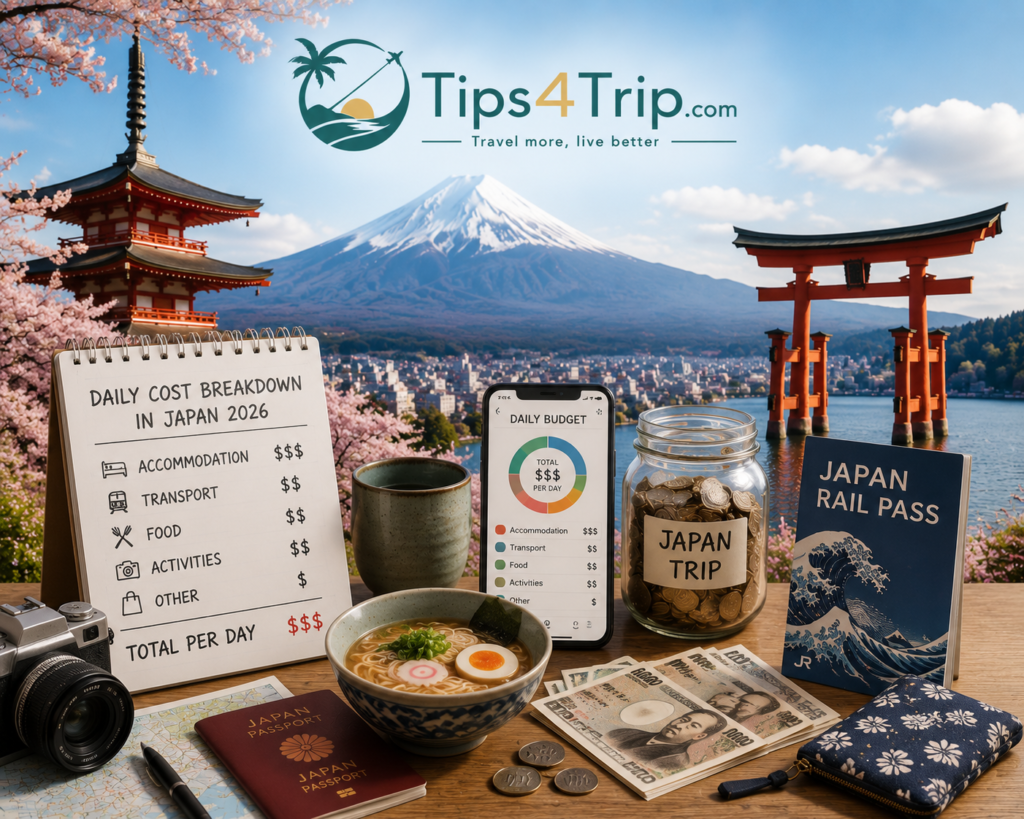
Daily expenses vary substantially based on accommodation choices, dining habits, and transit preferences. The following itemized breakdown outlines expected daily spend per person across budget, mid-range, and luxury travel tiers in Japanese Yen (JPY) and US Dollar equivalents (calculated at roughly ¥150 JPY to $1 USD).
| Spend Category | Budget Tier (Backpacker) | Mid-Range Tier (Comfort) | Luxury Tier (Premium) |
|---|---|---|---|
| Accommodation (per night) | ¥3,500 – ¥5,500 ($23–$37) | ¥9,000 – ¥15,000 ($60–$100) | ¥35,000 – ¥90,000+ ($233–$600+) |
| Food & Beverage (3 meals) | ¥2,500 – ¥3,500 ($17–$23) | ¥5,500 – ¥9,000 ($37–$60) | ¥15,000 – ¥35,000 ($100–$233) |
| Local Transit & Subways | ¥800 – ¥1,200 ($5–$8) | ¥1,500 – ¥2,500 ($10–$17) | ¥5,000 – ¥15,000 ($33–$100) |
| Attractions & Dual Fees | ¥1,000 – ¥1,800 ($7–$12) | ¥2,000 – ¥3,500 ($13–$23) | ¥5,000 – ¥20,000 ($33–$133) |
| Estimated Daily Total | ¥7,800 – ¥12,000 ($52–$80) | ¥18,000 – ¥30,000 ($120–$200) | ¥60,000 – ¥160,000+ ($400–$1,066+) |
How Do 2026 Dual Pricing and Municipal Taxes Impact Your Budget?
The most significant shift facing visitors in 2026 is the rollout of dual pricing systems and expanded tourist levies across popular prefectures. Dual pricing charging higher fees for non-residents is no longer a theoretical debate—it is an operational reality at major historic sites. For example, entry to UNESCO World Heritage site Himeji Castle costs ¥2,500 for non-resident adults compared to ¥1,000 for local city residents. Similarly, Mount Fuji introduced a compulsory ¥2,000 climbing fee for popular trails to manage overcrowding.
Municipal accommodation taxes have also expanded dramatically. While Tokyo charges a modest ¥100 to ¥200 per night per person for mid-range hotel rooms, Kyoto revised its lodging tax ordinance into a steep multi-tier system charging up to ¥10,000 per night for high-end luxury stays. Additionally, Japan’s international tourist departure tax (“Sayonara Tax”) updated to ¥3,000 per person, which is automatically included in international flight bookings. A comprehensive Japan trip cost 2026 budget breakdown must factor an extra ¥1,500 to ¥5,000 per person overall for these new entry fees and lodging taxes.
What Is the Smartest Transport Strategy Post-JR Pass Hike?
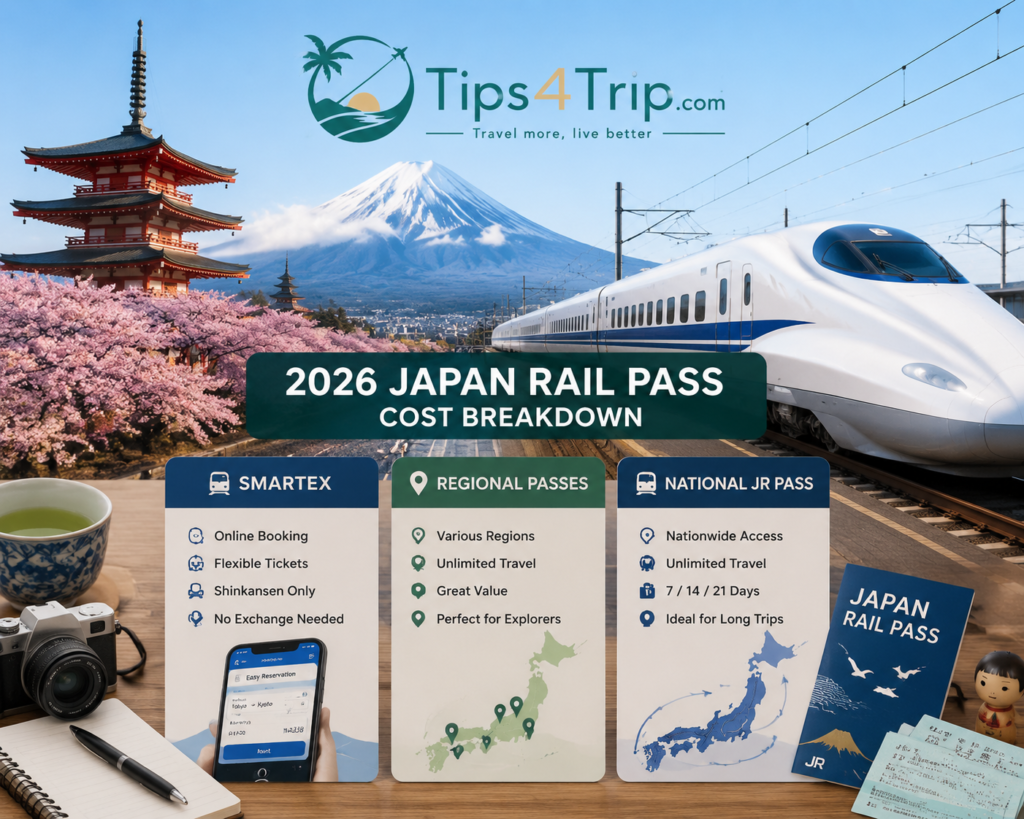
Intercity transportation requires careful planning because the 7-day nationwide JR Pass costs around ¥50,000 following major price increases. For standard Golden Route trips covering Tokyo, Kyoto, and Osaka, purchasing individual point-to-point Shinkansen tickets is almost always cheaper than buying a national rail pass. A one-way Shinkansen ticket between Tokyo and Shin-Osaka costs roughly ¥14,500, meaning a round trip costs under ¥30,000—far below the cost of the national pass.
For regional travel, targeted passes like the JR West Kansai Area Pass or regional Shinkansen passes still offer solid value. For inner-city travel in Tokyo and Osaka, local IC cards (Suica, Pasmo, ICOCA) remain essential. While physical chip shortages mean standard physical cards can be tricky to source at airports, digital IC cards loaded directly into Apple Wallet or short-term tourist cards like the Welcome Suica provide seamless contact-free travel on subways and buses at standard municipal rates of ¥200 to ¥350 per ride.
How Much Should You Budget for Food and Lodging by Tier?
Accommodation costs reflect the largest price spread in Japan. Budget travelers can secure clean dorm beds in top-rated hostels or capsule hotels in Tokyo or Kyoto for ¥3,500 to ¥5,500 per night. Mid-range travelers will find excellent value in modern business hotel chains such as APA Hotels, Sotetsu Fresa Inn, or Daiwa Roynet, which offer compact, hyper-clean private rooms with private baths for ¥9,000 to ¥15,000 per night. Luxury travelers opting for 5-star international hotels or luxury ryokan with private hot-spring baths should expect rates from ¥35,000 to ¥90,000+ per night.
Food in Japan offers extraordinary quality across all price brackets. Budget travelers relying on legendary convenience stores like 7-Eleven, Lawson, and FamilyMart can eat well for ¥2,500 per day (egg sandos ¥250, bento boxes ¥550, hot coffee ¥120). Mid-range dining costs ¥5,500 to ¥9,000 daily, allowing for steaming bowls of ramen (¥1,000–¥1,400), lunch sets at tonkatsu shops, and evening izakaya spreads with beer. High-end omakase sushi and multi-course kaiseki meals range from ¥15,000 to ¥35,000 per seat. Incorporating regional variations into your Japan trip cost 2026 budget breakdown prevents last-minute financial surprises.
Frequently Asked Questions
Is the JR National Pass worth buying in 2026?
For most standard itineraries, no. Following significant price hikes, a 7-day national JR Pass costs approximately ¥50,000. Unless you are completing rapid, non-stop long-distance journeys across multiple distant regions within a few days, buying individual Shinkansen tickets or specialized regional rail passes is much cheaper.
How much does food cost per day in Japan for mid-range travelers?
Mid-range travelers should budget roughly ¥5,000 to ¥8,000 ($33–$53) per day for food. This comfortably covers a café breakfast, a lunch set at a local ramen or tonkatsu spot (¥1,000–¥1,800), and a sit-down izakaya dinner with drinks (¥3,000–¥5,000).
What is the new dual pricing system at Japanese attractions?
Dual pricing charges non-resident foreign visitors higher entry fees while preserving lower rates for local tax-paying residents. Introduced at major sites like Himeji Castle (¥2,500 for non-residents vs ¥1,000 for locals), this policy helps historic sites maintain facilities without overcharging local taxpayers.