Key Takeaways:
Analyzing your total japan trip cost 2026 budget breakdown reveals that a 10-day itinerary on the Golden Route ranges from $1,350 to $5,200+ per person.
- Entry-Level Total: $1,350–$1,650 (¥202,500–¥247,500) per person all-in, including economy flights, clean hostel or capsule accommodation, and local trains.
- Premium Total: $5,200–$7,800 (¥780,000–¥1,170,000) per person all-in, featuring business-class flights, luxury ryokans, kaiseki dinners, and Green Car Shinkansen seats.
- Rail Pass Reality: Buying individual Shinkansen tickets (Tokyo–Kyoto ¥13,320) saves over $145 per person compared to the ¥50,000 7-day nationwide Japan Rail Pass.
- Daily Ground Costs: Budget travelers average ¥10,000 ($67) daily for lodging, food, and subway fares, while luxury travelers average ¥45,000+ ($300+) daily.
10-Day Japan Trip Cost in 2026: Entry vs. Premium Itemized Basket
A 10-day travel baseline in Japan for 2026 varies widely depending on whether you choose budget-focused business hotels and street food or high-end ryokans and private tours. With exchange rates holding near ¥150 per $1 USD, visiting Japan remains exceptionally cost-effective for foreign visitors compared to North America or Western Europe.
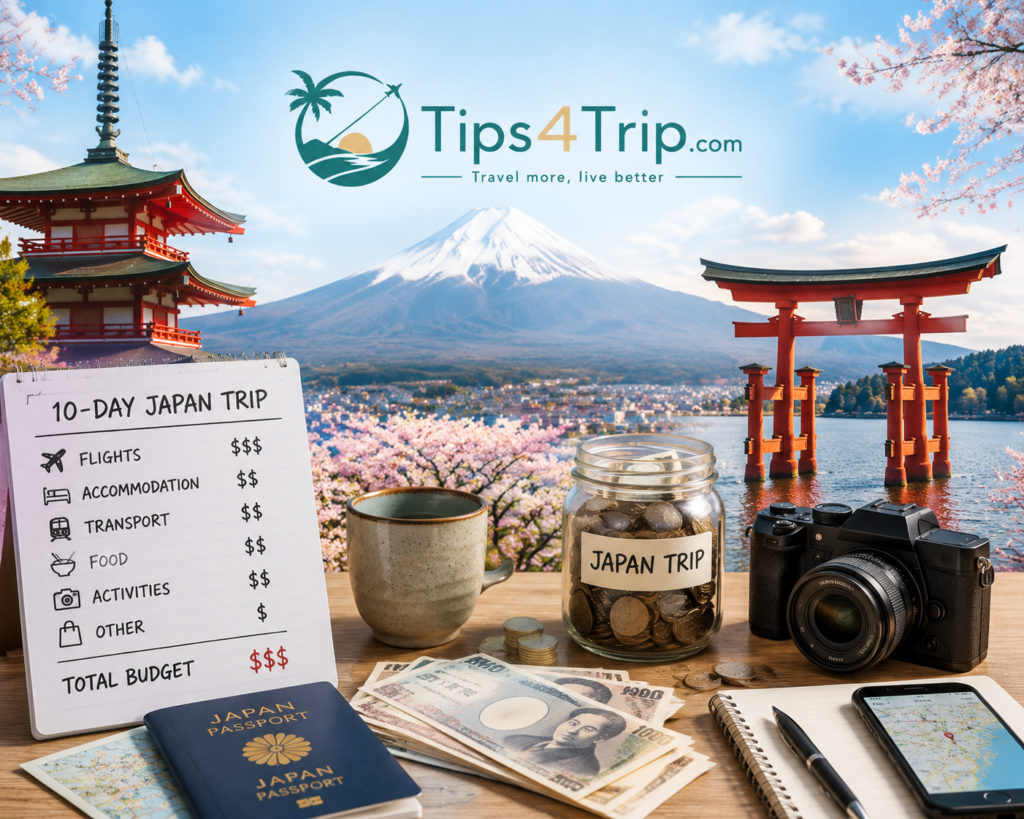
To plan accurately, examining a realistic japan trip cost 2026 budget breakdown requires comparing entry-level backpacking baseline numbers against premium travel expenses across seven key categories.
| Expense Category | Entry-Level Budget (10 Days) | Premium Traveler (10 Days) | Practical Notes |
|---|---|---|---|
| International Flights | $700 – $900 (¥105,000 – ¥135,000) | $2,500 – $4,500 (¥375,000 – ¥675,000) | Economy mid-week deal vs. Business class route |
| Accommodation (9 Nights) | $315 – $450 (¥47,250 – ¥67,500) | $1,800 – $3,200 (¥270,000 – ¥480,000) | Hostel dorm / capsule vs. 5-Star hotel & luxury ryokan |
| Food & Meals | $180 – $250 (¥27,000 – ¥37,500) | $800 – $1,500 (¥120,000 – ¥225,000) | Konbini & ramen shops vs. Omakase sushi & kaiseki |
| Intercity Transport | $185 – $220 (¥27,750 – ¥33,000) | $280 – $380 (¥42,000 – ¥57,000) | Point-to-point Shinkansen vs. First-class Green Car |
| Local Transit & IC Cards | $50 – $70 (¥7,500 – ¥10,500) | $120 – $200 (¥18,000 – ¥30,000) | Subway Pasmo/Suica vs. Taxis & private luggage transfers |
| Activities & Attractions | $40 – $70 (¥6,000 – ¥10,500) | $300 – $600 (¥45,000 – ¥90,000) | Free shrines & temples vs. Guided tea ceremonies & USJ Express |
| eSIM & Essentials | $15 – $25 (¥2,250 – ¥3,750) | $40 – $60 (¥6,000 – ¥9,000) | 10GB digital eSIM vs. Unlimited pocket Wi-Fi router rental |
| ESTIMATED TOTAL (Per Person) | $1,485 – $1,985 (¥222,750 – ¥297,750) | $5,840 – $10,440 (¥876,000 – ¥1,566,000) | Includes all flights, ground expenses, and activities |
How Much Does Accommodation Cost in Japan in 2026?
Accommodation in 2026 costs between ¥3,500 ($23) per night for a modern capsule bed and ¥80,000+ ($530+) per night for a high-end luxury room in Tokyo or Kyoto. Business hotels represent the standard sweet spot for mid-range travelers, providing immaculate private rooms and ensuite bathrooms at predictable rates.
Budget travelers in Tokyo (Asakusa, Ueno) or Kyoto (Kawaramachi) can book clean hostel dormitories or boutique capsule stays like Nine Hours for ¥3,500 to ¥5,000 ($23–$33) per night. Japanese business hotel chains—such as Toyoko Inn, APA Hotel, and Dormy Inn—cost ¥8,000 to ¥13,000 ($53–$87) per night double occupancy. Dormy Inn locations even include complimentary hot spring onsen baths and free night-time ramen bowls.
Premium travelers opting for luxury hot-spring ryokans in Hakone or Arashiyama should expect to pay ¥50,000 to ¥120,000 ($333–$800) per night, which includes a multi-course seasonal kaiseki dinner and private bath access. High-end international hotels like the Four Seasons Kyoto or Aman Tokyo range from ¥110,000 to ¥220,000 ($733–$1,466) per night during standard seasons.
Is the JR Pass Worth Buying for a 10-Day Itinerary?
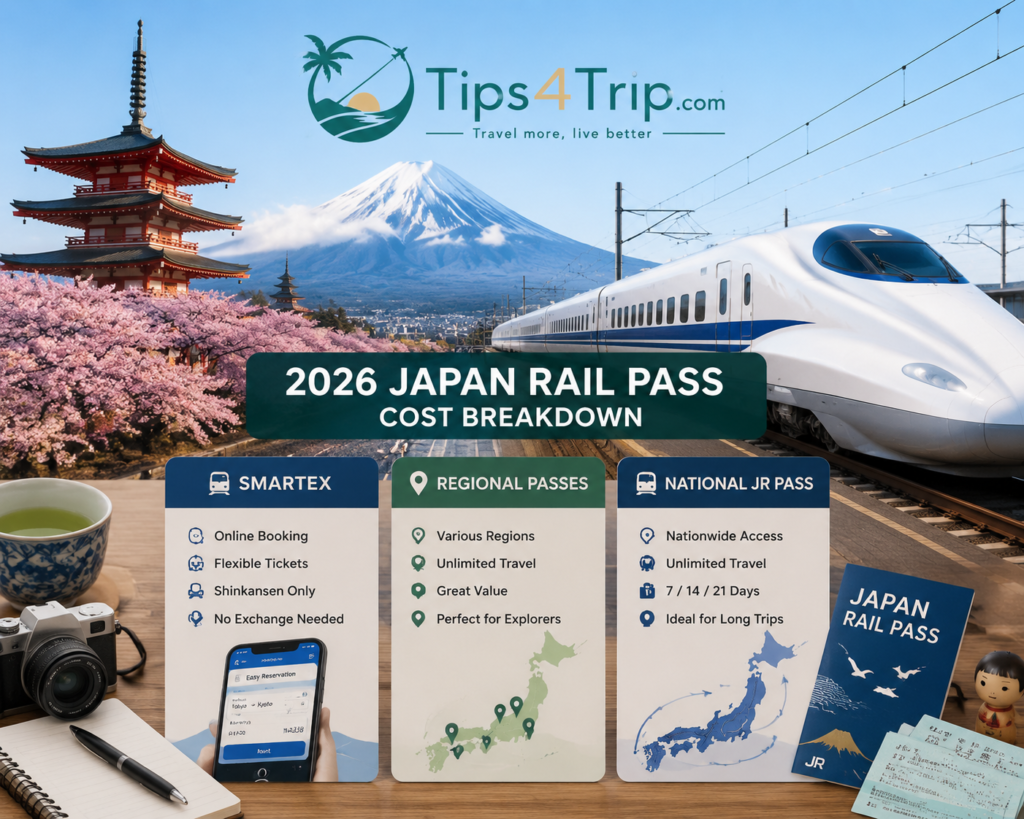
Buying a 7-day nationwide Japan Rail Pass is not worth the money for a standard 10-day Golden Route itinerary in 2026. Following major price adjustments, a 7-day Ordinary JR Pass costs ¥50,000 ($333), which exceeds the cost of purchasing individual bullet train tickets for the classic Tokyo–Kyoto–Osaka loop.
When evaluating your total japan trip cost 2026 budget breakdown, point-to-point transit math highlights the savings clearly. A reserved bullet train seat from Tokyo to Kyoto on the Nozomi Shinkansen costs ¥13,320 ($89). The local train from Kyoto to Osaka costs ¥580 ($4), and returning from Osaka to Tokyo costs ¥13,870 ($92). Your total intercity transportation cost comes to ¥27,770 ($185), saving you over ¥22,000 ($148) per person compared to the pass.
Point-to-point tickets also grant access to the fastest Nozomi and Mizuho trains, which are excluded from the standard JR Pass without paying steep supplements. The nationwide JR Pass only becomes cost-effective if your 10-day route adds distant destinations like Hiroshima, Kanazawa, and Hakodate within a compressed 7-day window.
What Should You Budget for Daily Food and Meals in 2026?
Daily meal expenses in Japan range from ¥2,500 ($17) per day for casual dining to ¥25,000+ ($165+) per day for multi-course culinary experiences. High culinary standards mean that low-cost meals in Japan offer exceptional quality and food safety regardless of price point.
Entry-level food budgets rely on Japan’s famous convenience stores (konbini) and fast-casual restaurants. Breakfast at 7-Eleven or Lawson—consisting of an egg salad sandwich, salmon onigiri, and hot coffee—costs roughly ¥450 ($3). Lunch at a beef bowl chain like Sukiya or a standing ramen shop in Shinjuku runs ¥700 to ¥1,000 ($5–$7). A hearty izakaya dinner with draft beer, gyoza, and yakitori skewers averages ¥1,800 to ¥2,500 ($12–$17) per person.
Premium diners can sample high-end gastronomy across Tokyo and Kyoto. Sit-down lunch sets at Michelin-recommended tempura or tonkatsu houses cost ¥4,000 to ¥8,000 ($27–$53). High-end sushi omakase in Ginza or fine-dining kaiseki in Kyoto run ¥18,000 to ¥35,000+ ($120–$233+) per person, requiring reservations 30 to 90 days in advance.
How Can You Cut Hidden Costs on a 2026 Japan Trip?
Executing a smart japan trip cost 2026 budget breakdown requires cutting non-essential add-ons while retaining authentic regional experiences. Implementing targeted savings habits on connectivity, regional transit, and shopping preserves your daily spending cash.
- Skip Overseas Roaming Fees: Avoid $10–$15 per day international carrier roaming charges by purchasing a local eSIM (Airhub or Ubigi) for $15–$22, offering 10GB of high-speed data for 30 days.
- Travel in Shoulder Seasons: Avoid Cherry Blossom season (late March to early April) and Golden Week (late April to early May) when hotel room rates triple. Travel in May, June, or September for lower lodging rates and fewer tourist crowds.
- Shop Basement Depachika Sales: Visit department store food halls (depachika) in major railway stations after 7:30 PM, when fresh sushi boxes, bento meals, and artisanal pastries are discounted by 30% to 50%.
- Load Mobile IC Cards: Add a digital Suica or Pasmo card directly to your smartphone wallet before arrival to tap through city subways, buses, and vending machines without paying ticketing transaction fees.
FAQ
How much cash should I carry for a 10-day trip to Japan in 2026?
Carrying ¥15,000 to ¥20,000 ($100–$133) in cash per person is ideal for a 10-day trip in 2026. While credit cards and mobile IC cards are accepted at most urban stores and hotels, cash remains essential for temple admission fees, rural buses, coin lockers, and small ramen shops.
Is Japan cheap or expensive to visit in 2026 for tourists?
Japan is very affordable for Western tourists in 2026 due to historic exchange rates hovering near ¥150 per $1 USD. Restaurant meals, subway fares, and business hotels are noticeably cheaper in Japan than in major US or European tourist destinations. A traveler can easily customize a trip across entry-level or luxury budgets.
What is the cheapest month to fly to Japan in 2026?
January and February (excluding Lunar New Year) are the cheapest months to fly to Japan in 2026. Shoulder months like June and November also offer significantly cheaper transatlantic and transpacific airfares compared to spring cherry blossom and mid-summer peak periods. Booking three months ahead secures the best discount fares.