Key Takeaways:
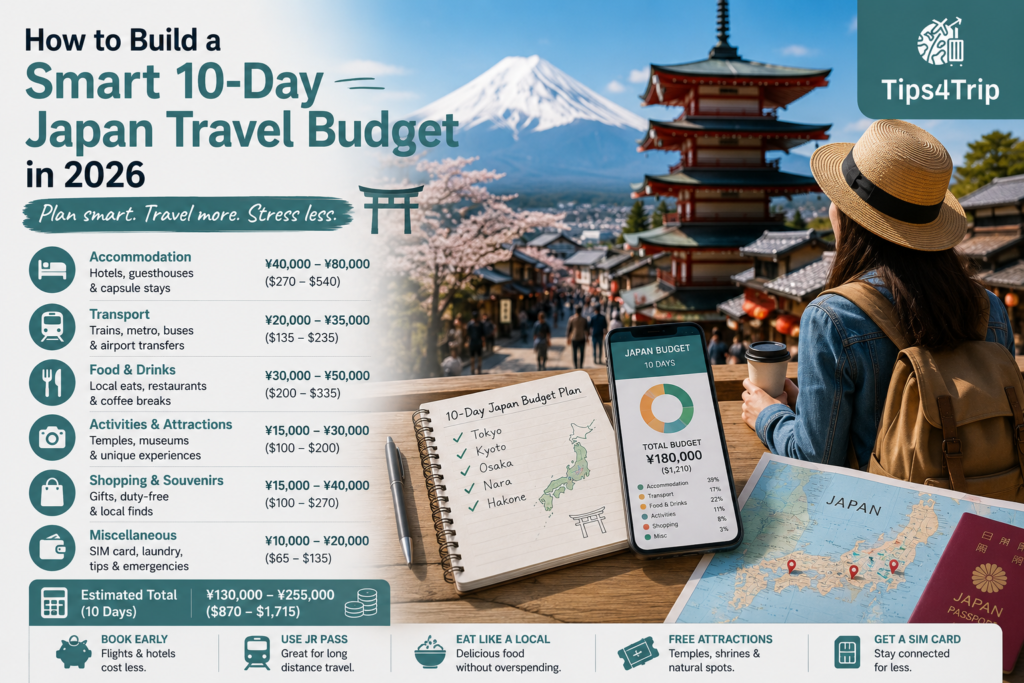
A realistic japan travel budget 10 days 2026 averages ¥165,000 ($1,100 USD) for budget travelers to ¥320,000 ($2,130 USD) for mid-range stays.
- Total Budget Range: Expect to spend between ¥165,000 ($1,100) and ¥320,000 ($2,130) per person, excluding international long-haul flights.
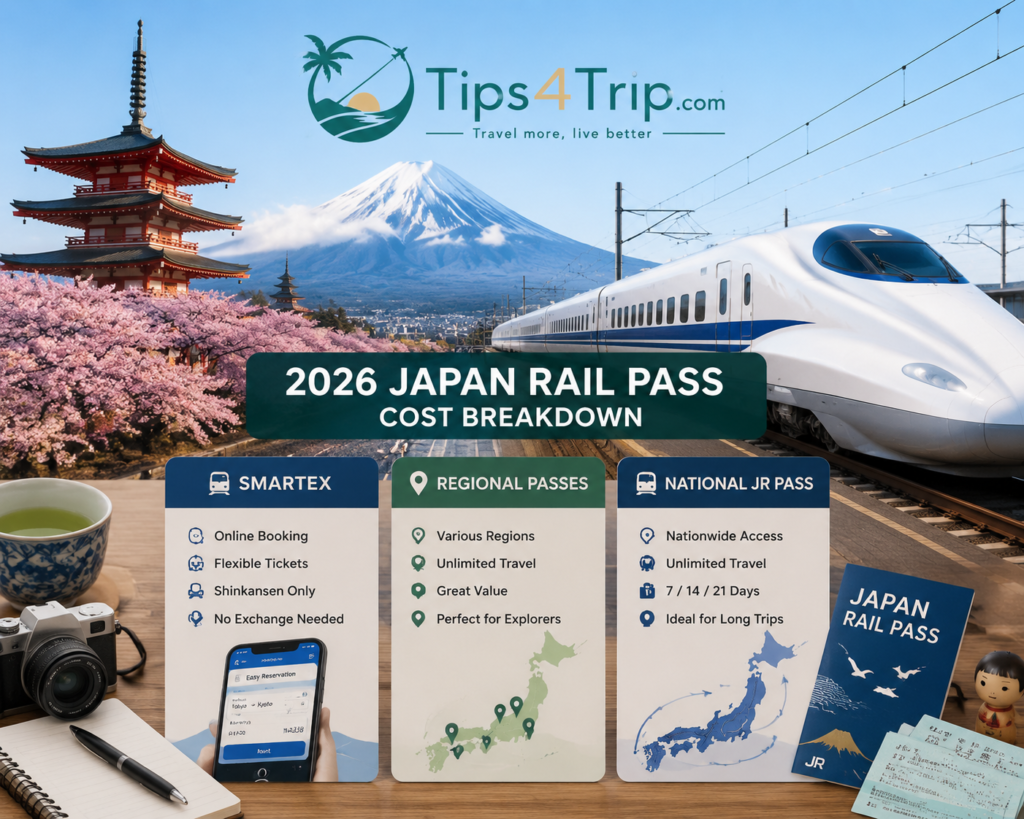
- Transit Winner: Point-to-point Nozomi Shinkansen tickets cost ¥29,670 total, saving ¥20,330 compared to the ¥50,000 7-day nationwide JR Pass.
- Daily Food & Lodging: Allocate ¥3,500–¥7,000 daily for dining and ¥6,000–¥18,000 per night for business or boutique hotels.
- IC Card Strategy: Load ¥5,000 onto a Welcome Suica or digital IC card for effortless local metro rides and konbini purchases.
How Much Does a 10-Day Trip to Japan Cost in 2026?
A 10-day trip to Japan on the Golden Route (Tokyo, Kyoto, and Osaka) in 2026 costs approximately ¥165,000 ($1,100 USD) per person on a budget tier and ¥320,000 ($2,130 USD) on a comfortable mid-range tier, excluding international airfare. Favorable exchange rates mean your foreign currency stretches significantly further, but targeted price revisions across transport and major tourist attractions require a deliberate spending plan.
To keep costs under control, your largest line items—accommodation and intercity train travel—must be calculated in advance. Booking business chain hotels six to eight weeks ahead and opting out of redundant nationwide rail passes will instantly shave hundreds of dollars off your total bill. The table below outlines a realistic, itemized spending basket for two distinct travel styles based on current 2026 yen exchange rates.
| Cost Category | Budget Tier (JPY / USD) | Mid-Range Tier (JPY / USD) | Savings Strategy |
|---|---|---|---|
| Accommodation (9 Nights) | ¥54,000 ($360) | ¥135,000 ($900) | Book business hotels near JR loop stations. |
| Intercity Transit (Shinkansen) | ¥29,670 ($198) | ¥29,670 ($198) | Buy point-to-point Nozomi reserved seats. |
| Local Metro & IC Fares | ¥7,000 ($47) | ¥10,000 ($67) | Use Tokyo 72-Hour Subway Ticket & IC cards. |
| Food & Dining (10 Days) | ¥35,000 ($233) | ¥75,000 ($500) | Mix konbini breakfasts with sit-down dinners. |
| Sightseeing & Entry Fees | ¥12,000 ($80) | ¥25,000 ($167) | Reserve high-demand view decks online in advance. |
| eSIM / Connectivity | ¥2,500 ($17) | ¥5,000 ($33) | Buy unlimited 10-day digital eSIMs online. |
| Insurance & Incidentals | ¥5,000 ($33) | ¥10,000 ($67) | Keep ¥10,000 cash for small temples and stalls. |
| Total (Excl. Flights) | ¥145,170–¥165,170 ($1,100) | ¥289,670–¥319,670 ($2,130) | Skip national JR Pass; book early. |
Shinkansen vs JR Pass in 2026: What Is the Smart Transit Strategy?
For a classic 10-day Tokyo-Kyoto-Osaka itinerary, buying individual point-to-point Shinkansen tickets costs ¥29,670 and saves you ¥20,330 per person compared to purchasing a 7-day nationwide JR Pass at ¥50,000. Ever since the nationwide Japan Rail Pass underwent a massive price hike, holding a national pass on the standard Golden Route guarantees you will overpay.
Calculating a modern japan travel budget 10 days 2026 requires strict line-item transit math. Here is the exact breakdown for the individual ticket approach using bullet trains on the Tokaido Shinkansen line:
- Tokyo Station to Kyoto Station: ¥14,370 (Nozomi Shinkansen, reserved seat, 2 hours 15 minutes).
- Kyoto Station to Osaka (Shin-Osaka / Osaka): ¥580 (JR Special Rapid Service, 29 minutes).
- Shin-Osaka Station to Tokyo Station: ¥14,720 (Nozomi Shinkansen, reserved seat, 2 hours 25 minutes).
- Total Intercity Fare: ¥29,670 (~$198 USD).
Beyond saving ¥20,330, point-to-point tickets let you ride the lightning-fast Nozomi trains, which depart every 3 to 5 minutes. The national JR Pass restricts travelers to the slower Hikari or Kodama trains unless you pay a steep surcharge per leg. Furthermore, regional alternatives like the Hokuriku Arch Pass (¥35,000) force a 5-hour detour through Kanazawa on the Sea of Japan coast, which wastes precious daylight during a short 10-day vacation.
For local urban travel in Tokyo, pair your point-to-point bullet train tickets with a 72-Hour Tokyo Subway Ticket (¥1,500), which covers all Tokyo Metro and Toei lines. In Kyoto and Osaka, load ¥5,000 onto a digital IC card (Suica, Pasmo, or ICOCA) on your smartphone for local subways, city buses, and convenience store transactions.
Where Should You Stay in Tokyo, Kyoto, and Osaka to Save Money?
Choosing business hotels like APA, Daiwa Roynet, Sotetsu Fresa Inn, or Dormy Inn near major transit hubs reduces nightly accommodation costs to ¥6,000–¥15,000 without sacrificing cleanliness, private bathrooms, or modern amenities. Accommodation eats up the largest single chunk of any japan travel budget 10 days 2026, but strategic location choices prevent unnecessary spending on daily transit.
Tokyo Budget Lodging: Ueno, Asakusa, and Otsuka
Avoid expensive hotel hubs like Shinjuku and Shibuya. Ueno and Asakusa offer hostel dorms from ¥3,500 to ¥5,000 per night, while clean private rooms in business hotels around Otsuka or Nippori run ¥8,000 to ¥13,000 ($53–$87 USD). These neighborhoods connect directly to the JR Yamanote loop line, making sightseeing seamless.
Kyoto Budget Lodging: Gojo and Kyoto Station South
Hotels near Gion and Higashiyama charge high boutique premiums. Look south of Kyoto Station or along the Karasuma Subway line near Gojo Station, where mid-scale business hotels average ¥9,000 to ¥16,000 ($60–$107 USD) per night. Hostel beds in Kyoto average ¥4,000 per night.
Osaka Budget Lodging: Shin-Imaimiya and Namba Fringe
Osaka offers the best lodging value on the Golden Route. Budget business hotels in Shin-Imaimiya or south Namba cost ¥6,000 to ¥11,000 ($40–$73 USD) per night for private rooms. Staying in Osaka for 4 nights and taking 30-minute JR local trains into Kyoto and Nara can cut your total lodging bill by 25%.
How Much Do Food and Attractions Cost Daily in Japan?
A realistic food and entry fee allocation for a 10-day Japan trip ranges from ¥4,500 per day for street eats and konbini meals to ¥10,000 per day for sit-down izakayas and top-tier sights. Balancing quick convenience meals with memorable dining experiences keeps your total trip enjoyable without busting your overall japan travel budget 10 days 2026.
Daily Food Spending: Konbini vs Izakayas
Breakfast in Japan is easily handled at convenience stores like 7-Eleven, Lawson, or FamilyMart for ¥400 to ¥600 ($2.70–$4 USD), featuring egg salad sandwiches, steamed buns, and hot coffee. For lunch, fast-casual teishoku set meal spots (Matsuya, Sukiya, Yoshinoya) or ramen shops cost ¥800 to ¥1,400 ($5.30–$9.30 USD). Dinner at a neighborhood izakaya with drinks or a conveyor-belt sushi chain like Sushiro averages ¥2,000 to ¥4,000 ($13–$27 USD) per person.
Must-See Attractions and Ticket Prices
Sightseeing costs vary based on whether you prefer historic temples or modern digital art installations. Top paid entry experiences include:
- Shibuya Sky View Deck: ¥2,200–¥2,500 ($15–$17 USD) online reservation.
- TeamLab Planets / Borderless Tokyo: ¥4,200 ($28 USD).
- Kyoto Temples (Kiyomizu-dera, Kinkaku-ji): ¥400–¥600 ($2.70–$4 USD) per temple; Fushimi Inari shrine grounds are completely free.
- Osaka Castle & Umeda Sky Building: ¥600 ($4 USD) and ¥1,500 ($10 USD) respectively.
- Universal Studios Japan (USJ): ¥8,600–¥10,400 ($57–$70 USD) for a 1-Day Studio Pass.
Frequently Asked Questions
How much money do I need per day in Japan in 2026?
On average, a budget traveler needs ¥12,000 to ¥16,000 ($80–$105 USD) per day in 2026 to cover accommodation, local transit, food, and entrance fees. Mid-range travelers should plan for ¥25,000 to ¥32,000 ($165–$215 USD) daily for private business hotels and sit-down dining.
Is the national JR Pass worth buying for a 10-day trip in 2026?
No, the 7-day nationwide JR Pass costs ¥50,000 and is not worth it for a standard 10-day Golden Route itinerary. Point-to-point Shinkansen tickets between Tokyo, Kyoto, and Osaka cost under ¥30,000 total on the faster Nozomi train, saving you over ¥20,300 per person.
Is Japan cash-free or do I still need Japanese Yen in 2026?
While credit cards and IC cards like Suica or Pasmo are widely accepted across major Japanese cities, Japan is not entirely cash-free. You should carry ¥10,000 to ¥20,000 in cash for small temple admission fees, local street food stalls, rural buses, and coin lockers.