Key Takeaways:
Namba is the best place to stay in Osaka for first-time visitors due to non-stop airport transit and 24-hour food access.
- Best overall area: Namba offers direct 34-minute airport train links and 24-hour dining options in Dotonbori.
- Best for day trips: Umeda connects directly to Kyoto and Kobe via Hankyu Railway commuter lines.
- Best on a budget: Tennoji provides direct airport trains and major metro connections at lower room rates.
- Local transit pass: The Osaka Metro Enjoy Eco Card 1-day pass costs ¥820 on weekdays and ¥620 on weekends.
How we ranked Osaka’s top neighborhoods
Osaka is a sprawling metropolis divided into distinct urban pockets. For first-time travelers, choosing where to book a hotel comes down to two practical factors: how quickly you can reach your accommodation after landing, and where you can find a hot meal after late-night transit shuts down.
Instead of relying on vague atmospheric descriptions, this ranking evaluates neighborhoods on concrete infrastructure metrics. We prioritized direct transit connections to Kansai International Airport (KIX), access to major regional rail lines for day trips to Kyoto and Kobe, and the presence of dining options operating past midnight. Operating hours on the Osaka Metro Midosuji Line run from approximately 05:10 to 00:20 (Osaka Metro, 2026), making proximity to late-night food venues essential once trains stop running.
Neighborhood transit and dining comparison
Selecting an ideal base requires balancing transit convenience with evening activity. The table below outlines key practical metrics for Osaka’s primary hubs.
| Neighborhood | KIX Airport transit time & fare | Key train connections | Late-night dining accessibility | Primary advantage |
|---|---|---|---|---|
| Namba | 34 mins (¥1,450 Rapi:t) / 44 mins (¥970 Express) | 3 Metro lines, Nankai, Kintetsu, Hanshin, JR West | High (24-hour ramen, sushi, and izakayas) | Direct airport train and non-stop street food |
| Umeda | Approx. 50-60 mins via Osaka Station transfers | JR West, 3 Metro lines, Hankyu Railway, Hanshin | Moderate (izakayas open until 02:00-03:00) | Direct Hankyu trains to Kyoto and Kobe |
| Tennoji | Approx. 50 mins via JR Kansai Airport Rapid | 2 Metro lines, 3 JR West lines (incl. Osaka Loop) | Moderate (Shinsekai venues open late) | Direct airport access without private railway fees |
| Shin-Osaka | Approx. 50-60 mins via JR train transfers | Tokaido Shinkansen, Sanyo Shinkansen, Metro | Low (limited to station convenience stores late) | Seamless bullet train departures across Japan |
1. Namba: The ultimate base for first-time travelers
Namba is the top recommendation for anyone visiting Osaka for the first time. Situated in the city’s southern commercial core (Minami), Namba places you at the focal point of Osaka’s culinary and nightlife scene while offering unmatched transit connections.
Namba Station serves as a central hub connecting three Osaka Metro lines (Midosuji, Yotsubashi, Sennichimae), Nankai Electric Railway, Kintetsu Railway, Hanshin Railway, and JR West at JR Namba (Osaka Metro, 2026). Getting to Namba from Kansai International Airport is seamless. The Nankai Electric Railway Limited Express Rapi:t connects Kansai International Airport directly to Nankai Namba Station in 34 minutes (Nankai Electric Railway, 2026). Budget-conscious travelers can take the standard Nankai Airport Express, which costs ¥970 for a single adult fare and arrives in approximately 44 minutes (Nankai Electric Railway, 2026).
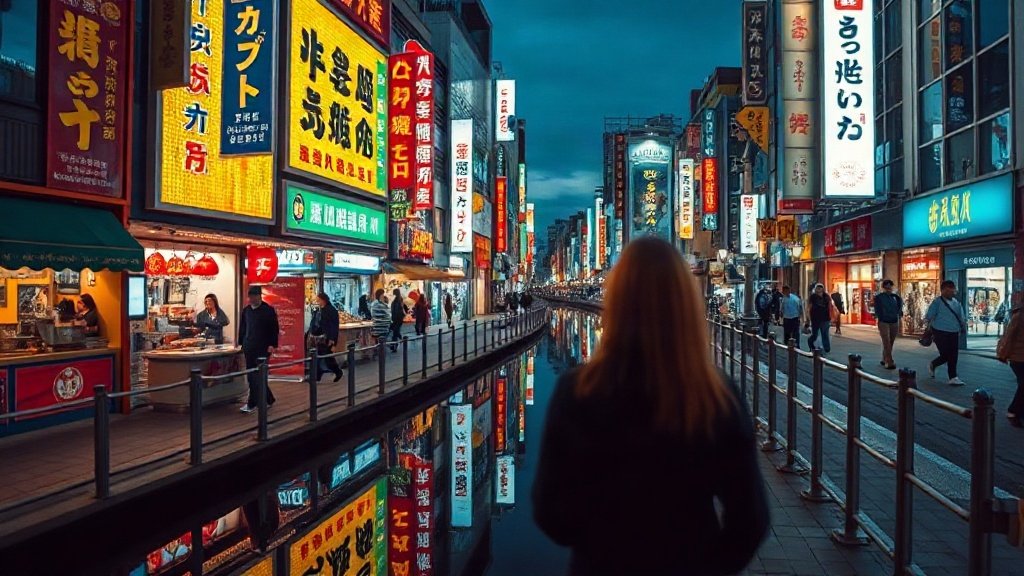
When metro service ends around 00:20, Namba remains fully alive. Dotonbori in Namba features 24-hour dining establishments, including 24-hour ramen restaurants like Ichiran Dotonbori and 24-hour sushi venues like Sushizanmai Dotonbori (Dotonbori Business Associations, 2026). The adjacent Shinsaibashi district adds extensive covered shopping arcades and late-night food options within easy walking distance of most local hotels.
2. Umeda: The best district for regional day trips
Umeda, located in Osaka’s northern downtown hub (Kita), is an ultra-modern commercial district dominated by skyscrapers, sprawling department stores, and interconnected underground shopping networks. It is the premier choice for travelers using Osaka as a launching pad to explore neighboring cities.
The vast Osaka-Umeda Station complex connects JR West (Osaka Station), Osaka Metro (Umeda, Higashi-Umeda, Nishi-Umeda stations), Hankyu Railway, and Hanshin Electric Railway (JR West & Hankyu Railway, 2026). For regional excursions, Hankyu Railway operates regional commuter lines from Osaka-Umeda Station connecting directly to Kyoto (Karasuma, Kyoto-Kawaramachi) and Kobe (Kobe-Sannomiya) (Hankyu Railway, 2026). Traveling between Umeda and Namba within the city is rapid: travel time on the Osaka Metro Midosuji Line between Namba Station and Umeda Station is approximately 8 minutes, with a base single adult fare of ¥240 (Osaka Metro, 2026).
Late-night dining in Umeda centers on the atmospheric izakaya alleys of Higashi-Dori and Ohatsu Tenjin. While it lacks the sheer density of 24-hour tourist venues found in Dotonbori, dozens of bars and grill houses remain open well past midnight. The trade-off for Umeda’s exceptional regional transit is the complexity of its central train terminal, which can take first-time visitors a day or two to navigate comfortably.
3. Tennoji: The practical budget choice with direct airport links
Located south of Namba, Tennoji offers a balance of heritage sights, modern shopping towers like Abeno Harukas, and competitive hotel rates. It provides a real neighborhood feel while retaining major urban rail connections.
Tennoji Station serves as a major southern transit junction connecting two Osaka Metro lines (Midosuji Line, Tanimachi Line) and three JR West lines (Osaka Loop Line, Yamatoji Line, Hanwa Line) (JR West, 2026). A key financial advantage for JR pass holders or direct commuters is that the JR Kansai Airport Rapid Service train connects Tennoji Station directly to Kansai International Airport without requiring transfers (JR West, 2026).
For late-night food, Tennoji is adjacent to Shinsekai, a historic entertainment district filled with traditional kushikatsu (deep-fried skewers) eateries and informal izakayas open late into the night. Because Tennoji sits slightly south of the main tourist core, hotels here frequently offer lower nightly room rates than comparable properties in Namba or Umeda.
4. Shin-Osaka: The ideal hub for Shinkansen travelers
Shin-Osaka is a purpose-built transit hub situated north of the Yodo River. The neighborhood surrounding the station is primarily business-oriented, filled with corporate offices, convenience stores, and business hotels built for efficiency.
Shin-Osaka Station is the terminal interchange between the Tokaido Shinkansen (operated by JR Central) and the Sanyo Shinkansen (operated by JR West) (JR West, 2026). If your itinerary involves taking the bullet train every morning to destinations like Hiroshima, Nagoya, or Tokyo, staying here saves significant commute time. Travel time between Shin-Osaka Station and Osaka Station via JR Special Rapid Service trains is approximately 4 minutes (JR West, 2026).
The primary drawback of Shin-Osaka is its limited late-night food scene. Once the restaurants inside the station building close around 22:00 to 23:00, dining options shrink primarily to 24-hour convenience stores and a few small izakayas. However, with the Midosuji Line operating until 00:20, you can easily ride back from Dotonbori after dinner.
Navigating local transit fares and train passes
Understanding Osaka’s transit pricing helps keep travel costs under control. Standard single fares on the Osaka Metro range from ¥190 to ¥390, calculated across five fare zones based on travel distance (Osaka Metro, 2026).
If you plan to ride the subway three or four times in a single day, purchasing an unlimited day pass yields instant savings. The Osaka Metro Enjoy Eco Card 1-day pass costs ¥820 for adults on weekdays and ¥620 on weekends and public holidays (Osaka Metro, 2026). You can purchase this pass directly at subway ticket machines, making it one of the easiest ways to move between Namba, Umeda, and Tennoji without buying individual tickets for every leg.
Frequently asked questions
Where is the best place to stay in Osaka for first time visitors?
Namba is the best neighborhood for first-time visitors in Osaka. It offers direct train connections to Kansai International Airport, serves three subway lines, and places you within short walking distance of 24-hour dining establishments and street food in Dotonbori.
Is it better to stay in Namba or Umeda?
Stay in Namba if you want immediate access to nightlife, late-night food, and direct non-JR airport trains. Stay in Umeda if you plan to take frequent day trips to Kyoto or Kobe using Hankyu Railway lines and prefer a modern commercial district.
How late does the subway run in Osaka?
Standard operating hours on the primary Osaka Metro lines, including the central Midosuji Line, run from approximately 05:10 in the morning until 00:20 at night. After midnight, travelers must rely on taxis or walk back to their hotels.