
Key Takeaways
First-time visitors should stay in Sirkeci or Karaköy for direct T1 tram access to historic sites and seamless late-night transit connections across the city.
- Transit pass savings: An anonymous reloadable Istanbulkart costs 165 TRY, bringing standard rail fares down to 46.20 TRY compared to 60 TRY for single-use tickets.
- Core sight access: The T1 tram connects key hubs like Sultanahmet, Sirkeci, and Karaköy with 2 to 5 minute peak frequencies between 06:00 and 00:00.
- Late-night mobility: The M2 Metro line operates 24-hour continuous service on weekends, whereas the T1 tram shuts down daily at 00:00.
Where should I stay in Istanbul as a first-time visitor?
First-time visitors should choose a neighborhood along the T1 tram spine or the M2 metro corridor to avoid reliance on taxis and navigating complex terrain. Transport efficiency and late-night access dictate how easily you can explore this vast metropolis without getting stranded after midnight.
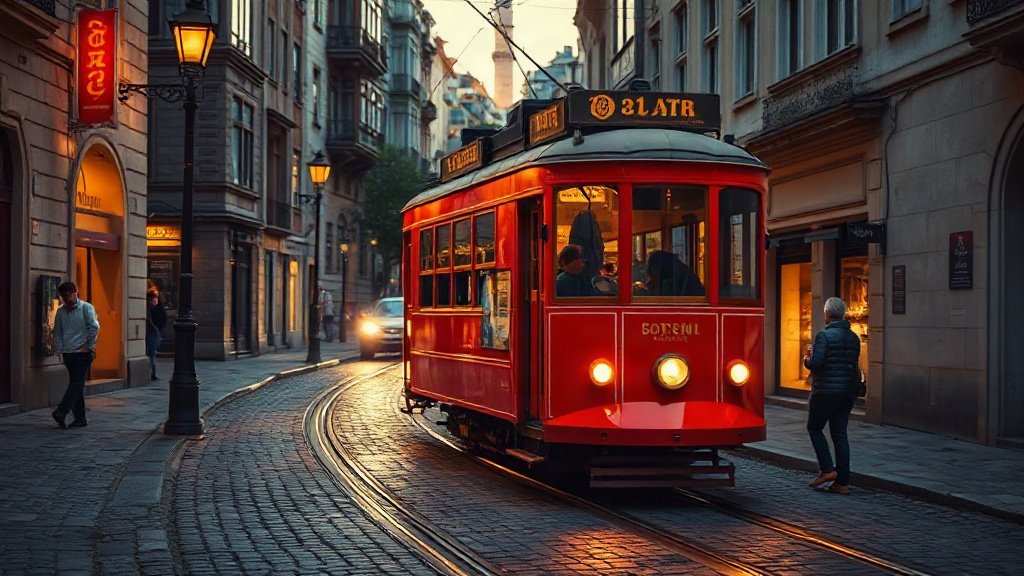
Istanbul’s dense geography makes public transport connectivity far more valuable than hotel aesthetics. The T1 Kabataş–Bağcılar tram line serves as the backbone for historic sightseeing, operating 31 stations across 19.3 kilometers and moving an average of 320,000 daily passengers. However, because the T1 stops operating at 00:00 nightly, your evening flexibility depends heavily on proximity to the M2 Metro line, which runs continuous 66-hour weekend Night Metro service from Friday morning through Sunday night.
How transit fees and connectivity determine where to book
Navigating Istanbul efficiently requires understanding transit fares and vehicle line limits before selecting your accommodation base. Using public transit significantly cuts costs and travel time compared to road traffic.
Purchasing an anonymous reloadable Istanbulkart requires a non-refundable fee of 165 TRY, according to Belbim and İBB regulations. A standard full fare for a single journey on Metro Istanbul rail and tram lines using an Istanbulkart costs 46.20 TRY. In contrast, purchasing a single-use electronic ticket or token without the card costs 60 TRY per journey. Furthermore, tapping an Istanbulkart for a first transfer within a 90-minute window reduces that secondary fare to 31.27 TRY, making multi-line journeys economical.
| Neighborhood | Primary Rail Line | Operating Hours | Late-Night Weekend Options | First-Time Transit Rating |
|---|---|---|---|---|
| Sirkeci / Gülhane | T1 Tram Line | 06:00 – 00:00 | Limited (T1 terminates at 00:00) | Highest (Flat terrain, direct rail to historic sights) |
| Karaköy | T1 Tram Line | 06:00 – 00:00 | Moderate (Short walk across bridge to night lines) | High (Harbor access, excellent day transit) |
| Sultanahmet | T1 Tram Line | 06:00 – 00:00 | Low (No weekend Night Metro integration) | Moderate (Unmatched sight walkability, strict midnight cut-off) |
| Taksim / Şişhane | M2 Metro Line | 24 Hours (Fri–Sun) | Highest (30-min weekend Night Metro frequency) | High (Hilly terrain, unmatched late-night flexibility) |
The best neighborhoods for first-time stays ranked
Neighborhood selection criteria prioritize direct access to the T1 tram line, walkability to major monuments, and safety when returning late at night via public transit.
1. Sirkeci and Gülhane: The ideal overall base for first-timers
Sirkeci offers the optimum balance between historic proximity, flat terrain, and fast transit interchange points.
Positioned along the flat coastal plain directly adjacent to the T1 line, Sirkeci allows you to board trams operating at 2 to 5 minute peak frequencies without climbing steep hills. Trams run directly from Sirkeci and Gülhane through Sultanahmet and Beyazıt to the west, and to Eminönü, Karaköy, and Kabataş to the east. The primary trade-off is late-night transit: because the T1 line terminates at 00:00 nightly, late evening returns require walking from nearby hubs or planning around midnight schedules.
2. Karaköy: Best for harbor views and dual-side access
Karaköy provides superior waterfront transport access and easy bridge connections to northern nightlife quarters.
Located directly across the Galata Bridge at a key T1 tram stop, Karaköy allows visitors to reach Sultanahmet in minutes while maintaining proximity to Beyoğlu. It is exceptionally well-connected during standard transit operating hours (06:00 to 00:00). While Karaköy itself experiences quiet streets after the evening rush, its location allows a manageable walk across the illuminated bridge to connect with late-night transport corridors if returning after midnight.
3. Sultanahmet: Unbeatable for daytime sights, limited after midnight
Sultanahmet provides immediate walking access to top historic sites but lacks late-night transit flexibility.
Staying directly in Sultanahmet allows you to walk to major historical complexes within minutes, bypassing morning transit entirely. The T1 tram runs right through the central plaza, linking you across its 31-station route. However, Sultanahmet becomes noticeably quiet late at night. Because the T1 line does NOT operate 24-hour weekend Night Metro service, travellers staying here must return to their accommodation before the 00:00 final tram departure or rely on non-rail transport options late at night.
4. Taksim and Şişhane: Best for late-night mobility and weekend transit
Taksim and Şişhane excel for evening flexibility due to continuous weekend metro services, despite steep walking gradients.
These districts sit along the M2 Yenikapı–Hacıosman Metro Line, which participates in Metro Istanbul’s 24-hour weekend Night Metro service. Operating continuously for 66 hours from 06:00 Friday through 00:00 Sunday, M2 trains run at 30-minute departure frequencies between midnight and morning. This makes Taksim and Şişhane ideal if you plan to stay out late. The downside for first-timers is physical: reaching daytime historic sites via the T1 tram requires transferring from the M2 metro line or walking down steep hills to the waterfront tram stops.
Is the Istanbulkart worth buying for a short trip?
The Istanbulkart is essential for any first-time visitor using public transit more than three times during their stay.
Paying for individual rides without a card costs 60 TRY per journey using single-use electronic tickets. By contrast, paying a 165 TRY card fee unlocks standard fares of 46.20 TRY alongside a discounted 31.27 TRY fare on your first 90-minute transfer. Over a three-day itinerary involving typical daily transit use across rail and tram lines, the Istanbulkart quickly recovers its initial purchase fee while eliminating queueing for single-use tokens at busy central stations.
Frequently asked questions
Which neighborhood in Istanbul is best for direct tram access?
Sirkeci and Sultanahmet offer the most direct access to the T1 Kabataş–Bağcılar tram line. Sirkeci features flat, highly walkable streets near key stops, making daily rail journeys throughout the historic center fast and convenient for first-time visitors.
Does the Istanbul tram run all night on weekends?
No, the T1 tram line terminates at 00:00 nightly and does not offer 24-hour service. Weekend Night Metro operations run continuously for 66 hours only on select underground metro lines, such as the M2 Yenikapı–Hacıosman line connecting Taksim and Şişhane.
How much does public transit cost in Istanbul in 2026?
An anonymous reloadable Istanbulkart card costs 165 TRY. Standard rail and tram journeys using the card cost 46.20 TRY, with discounted first transfers within 90 minutes priced at 31.27 TRY. Single-use electronic tickets cost 60 TRY per journey.